A full-body PEMF mat is a $900 to $2,500 purchase and most product pages are written to confuse you. This guide explains what each specification actually does so you can compare any brand, including ours, on the same terms.
1. Coils: how evenly the field covers you
PEMF is delivered by copper coils embedded in the mat. Each coil produces a field around itself, so the number and placement of coils decides whether your whole body is in the field or only your torso. Four coils cover the middle of a mat. Six covers a full-body mat adequately. Eight, as on the Synergy and Zenith, gives dense coverage from shoulders to calves. If a brand does not publish coil count, ask why.
2. Intensity: microtesla and Gauss
Intensity is measured in microtesla (µT) or Gauss (1 Gauss = 100 µT). Home mats typically range from 1 to 10 Gauss. Livewell mats deliver up to 150 µT, or 1.5 Gauss. Higher numbers sound better, but the research on PEMF for wellness spans a wide intensity range and most protocols sit at the low end. In practice, coverage and consistency of use matter more than a peak number. Be wary of brands that lead with intensity and hide coil count.
3. Frequency: Hz and what the programs mean
Frequency is how many pulses per second the coils emit. Most mats offer 1 to 30 Hz. Brands label ranges by brainwave band: delta (1 to 3 Hz) for rest, theta (4 to 7 Hz) for relaxation, alpha (8 to 12 Hz) for calm focus, beta (13 to 30 Hz) for alertness. What matters is whether you can adjust it. Preset-only mats lock you into a handful of programs; adjustable controllers let you change the session as your routine changes.
4. Red light: the feature that separates mats
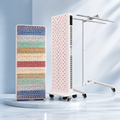
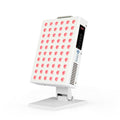
Many PEMF mats are really far infrared mats with coils added. Red light at 660 nm is a separate technology that acts at the skin surface, and it is where the biggest differences between brands live. Some have none. Some have 24 LEDs. The Livewell Synergy has 144. If red light is part of why you are buying, compare LED counts, not just the word “red light” on the box.
5. Far infrared and gemstones
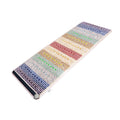
Nearly every mat heats a layer of crushed gemstones, most often amethyst and tourmaline, to emit far infrared warmth. More stone varieties change the mineral composition and, in some designs, the negative ion output. This is the least differentiated specification and the one most brands over-market. Treat it as a comfort feature, not a deciding one.
6. EMF shielding
A PEMF mat is an electrical device. Well-built mats include filtration and shielding layers so the only field you receive is the pulsed one you chose. Ask whether the mat has them. Livewell mats do.
7. Warranty, returns and who made it
Warranties in this category run from one to five years and return windows from 30 to 120 days. Longer is better and we say that knowing our own are one year and 30 days. Also ask who designed the mat. Livewell was founded by a practising physician; many competitors are wellness brands sourcing from the same factories.
Questions to ask any PEMF mat brand
- How many coils, and where are they placed?
- What is the intensity in µT or Gauss, and is it adjustable?
- What frequency range, and can I set it manually?
- How many red light LEDs, and at what wavelength?
- Does the mat have EMF filtration and shielding?
- What is the warranty, and who honours it?
- Who designed it?
Our answer
Five full-body mats, one ladder. The Core at $899 is PEMF and infrared. The Kinetic and Resonance add red light and more gemstones. The Synergy adds eight coils, 144 LEDs and negative ions. The Zenith is the flagship. See them side by side on the PEMF mats collection, or read how we compare to the other five brands buyers shortlist.
PEMF mats are wellness devices and are not intended to diagnose, treat, cure or prevent any disease. Consult a physician if you are pregnant, have an implanted electronic device or a serious medical condition.